




E M B E R - R E S I S T A N T V E N T S &
R E T R O F I T S
Embers find the vents
first.
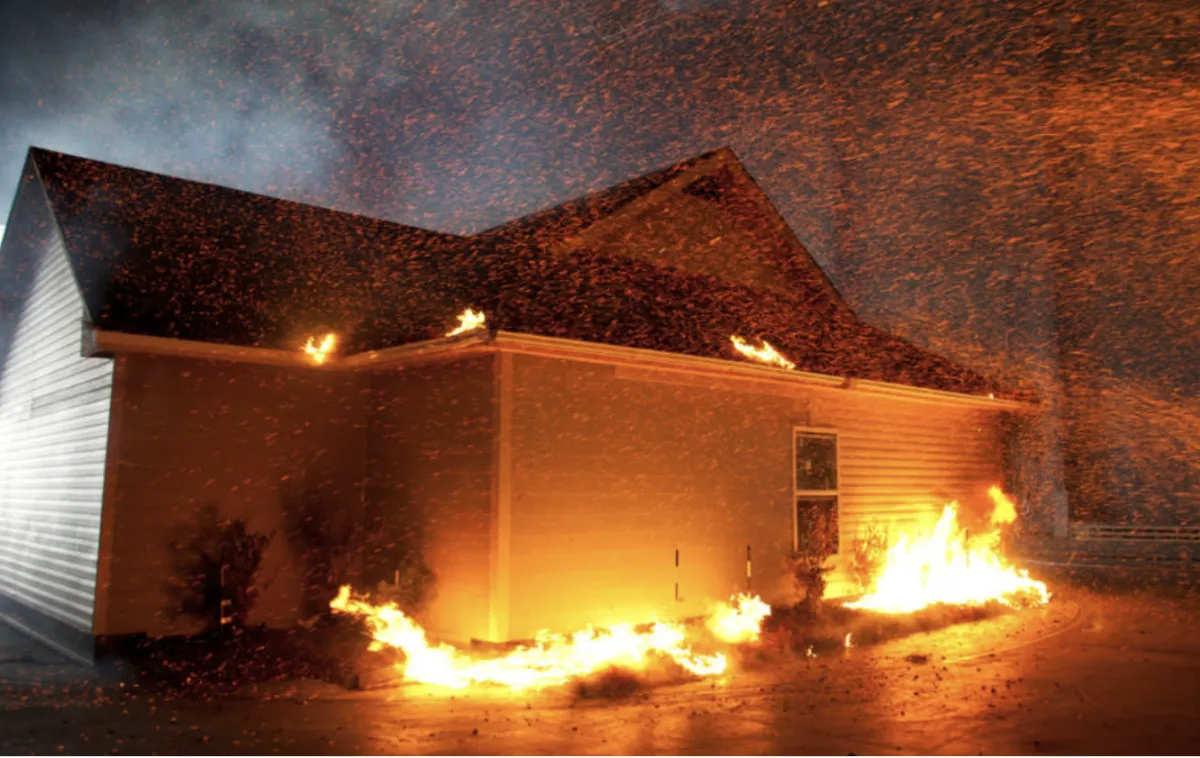
Embers and small flames, not the passing flame front, are the main way most homes ignite in a wildfire. Wind carries those embers into your foundation, attic, and eave vents, the openings where a home is most likely to ignite from the inside out. We screen and seal every vent to NFPA Firewise and current code, then document the work for your insurer.
Oregon CCB #259806 · Licensed GC
NFPA Certified Wildfire Mitigation Specialist
NFPA Firewise Trained
Certified Installer: WDM 98 · Vulcan · BrandGuard · MitigateNow
90%
of home ignitions in a wildfire start with embers, per IBHS.
A vent is a hole in your fire defense.
A standard vent screen lets embers pass into your attic and crawlspace, where they land on insulation, framing, and stored items. A house can burn from the inside out hours after the flame front has moved through.
Closing the vents is the highest-value, lowest-cost hardening step a homeowner can take.
T W O W A Y S W E P R O T E C T Y O U R
V E N T S
Retrofit the screen, or replace the vent.
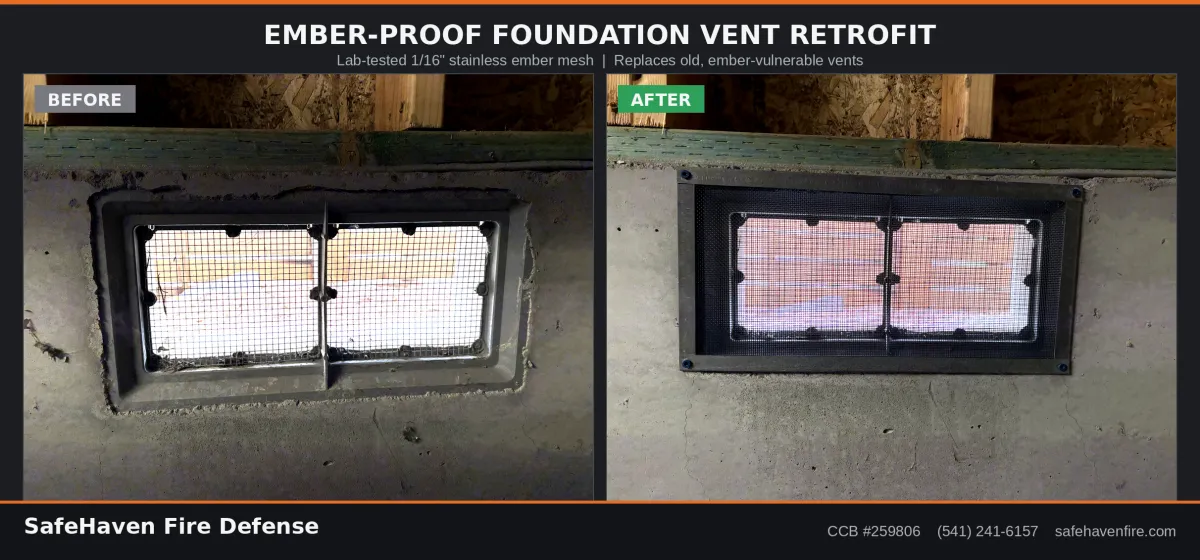
EMBER-RESISTANT · FROM $55/VENT
1. Ember-Proof Mesh Retrofit
We keep your existing vent and upgrade the screen to WildfireDefenseMesh 98, a 1/16-inch stainless steel ember mesh that is finer than code requires.
1/16" stainless, finer than the 1/8" standard
Rated 98%+ effective at stopping embers (ASTM E2886)
Cuts radiant heat and diffuses direct flame
Best value, fast install, keeps your airflow
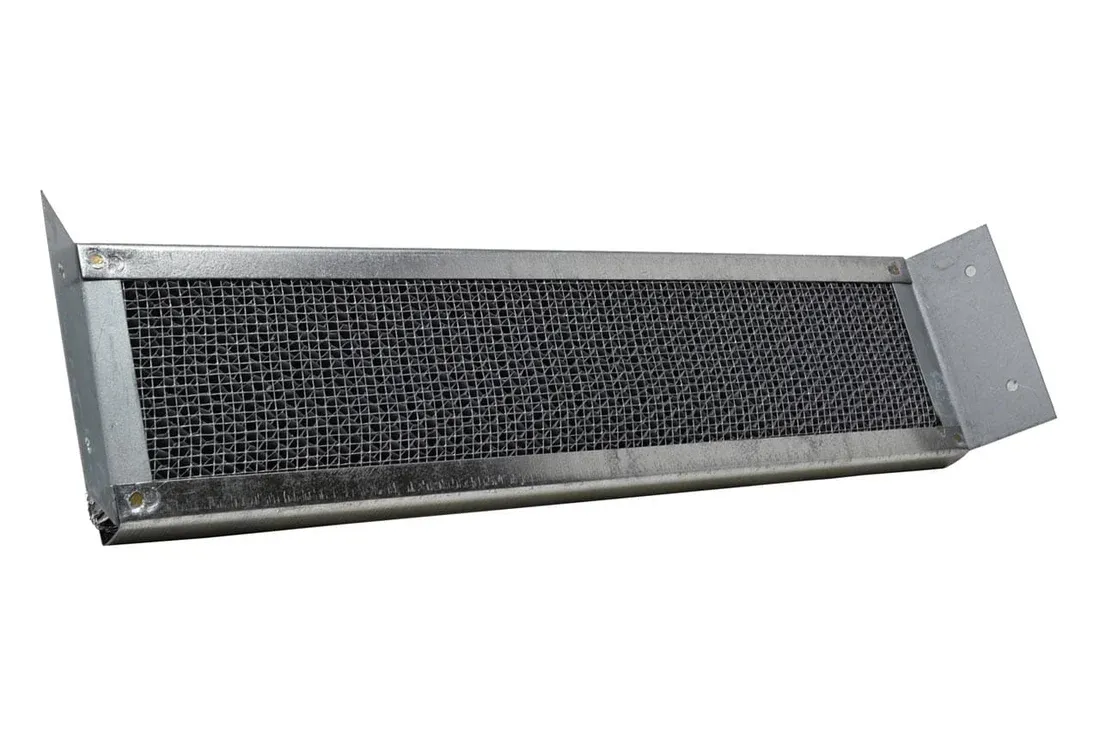
EMBER + FLAME · PREMIUM
2. Fire-Resistant Vent Replacement
For the strongest protection we replace the vent with a listed, tested assembly from Vulcan, BrandGuard, or MitigateNow. An intumescent core expands under heat and seals the opening shut.
Stops embers and direct flame
Intumescent honeycomb core seals under heat
OSFM listed, tested to ASTM E2886
Foundation, soffit, eave, gable, round bird-block
Products we are certified to install
WDM 98
Stainless ember mesh
Vulcan Vents
Intumescent fire vents
BrandGuard
Eave vents & gutter guards
MitigateNow
Vulcan Matrix & FireStorm
E V E R Y O P E N I N G O N Y O U R H O M E
We harden every vent type.
Foundation, crawlspace, gable, attic, soffit, eave, and round bird-block vents.
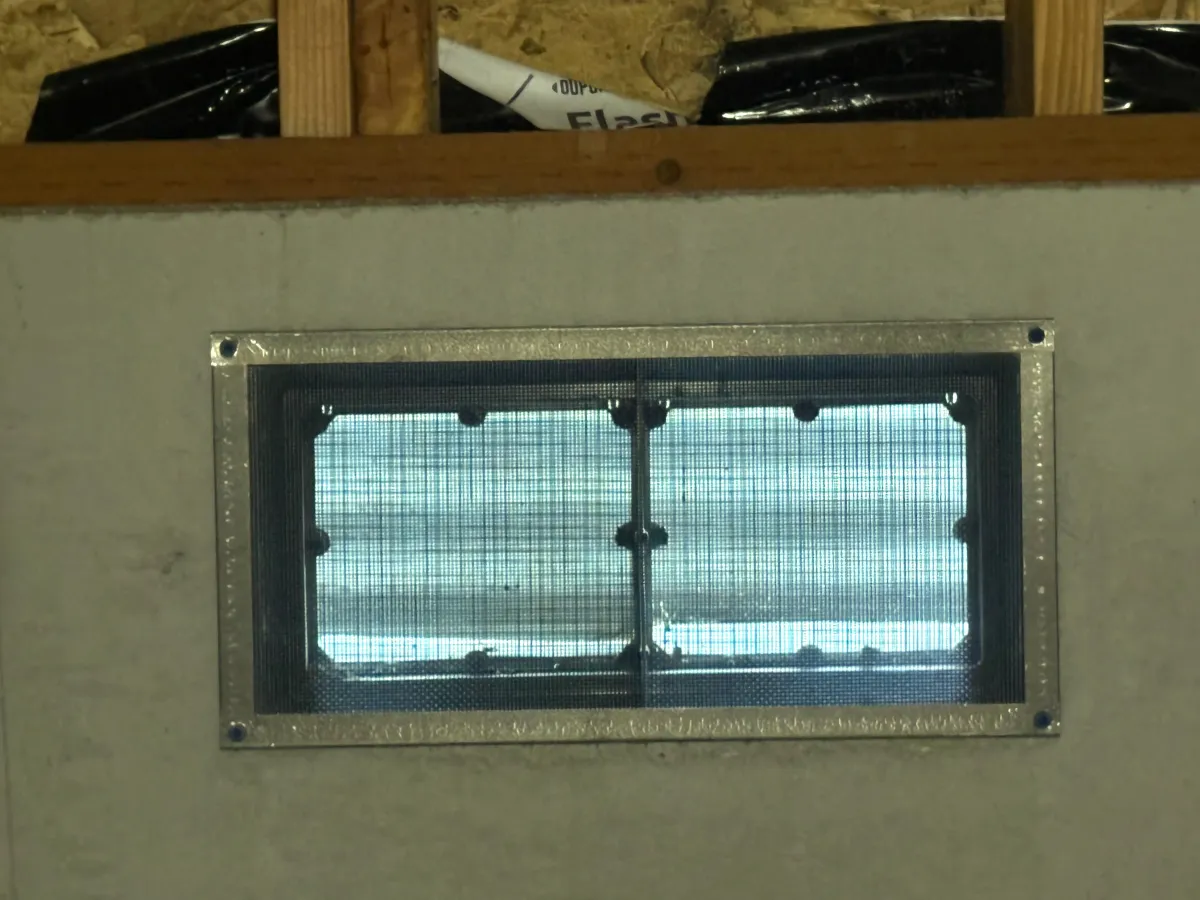
Foundation / Crawlspace
Exterior and under-home access
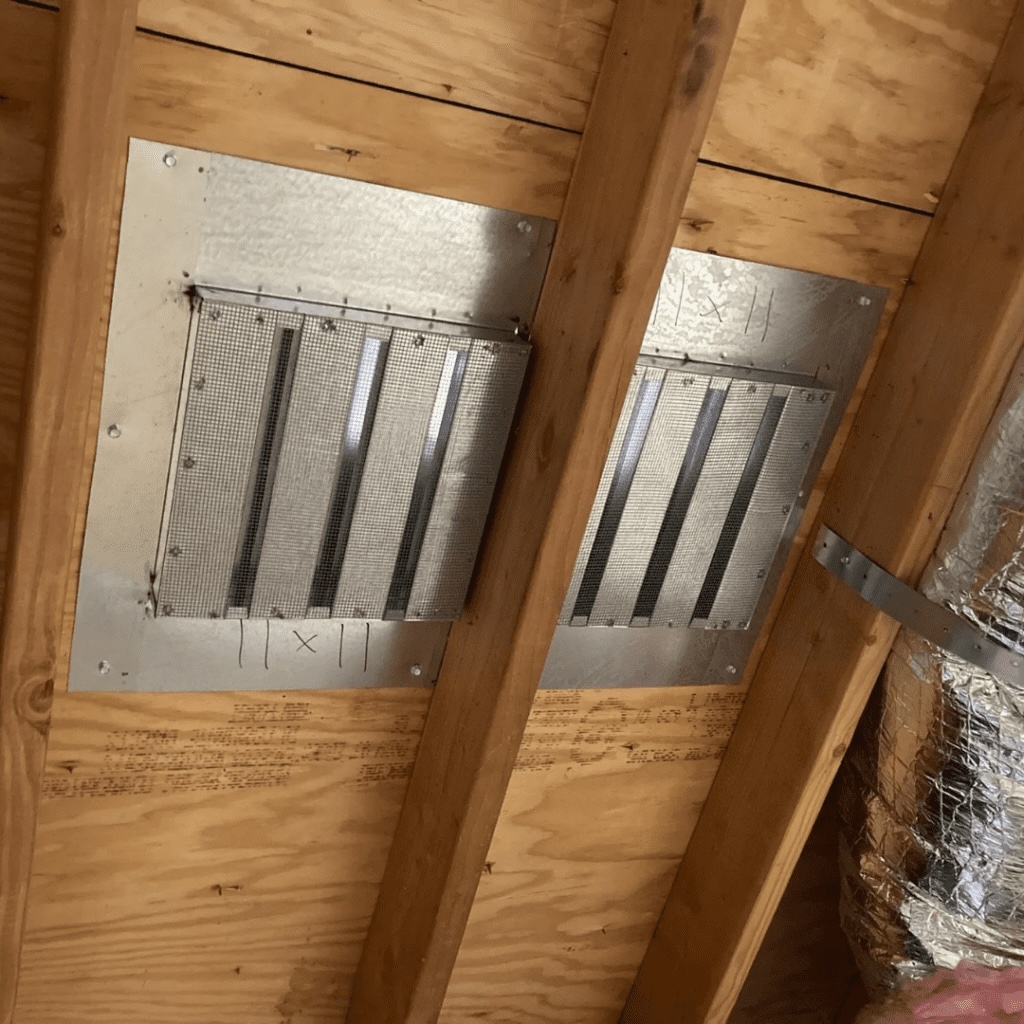
Gable / Attic
Mesh retrofit or full vent
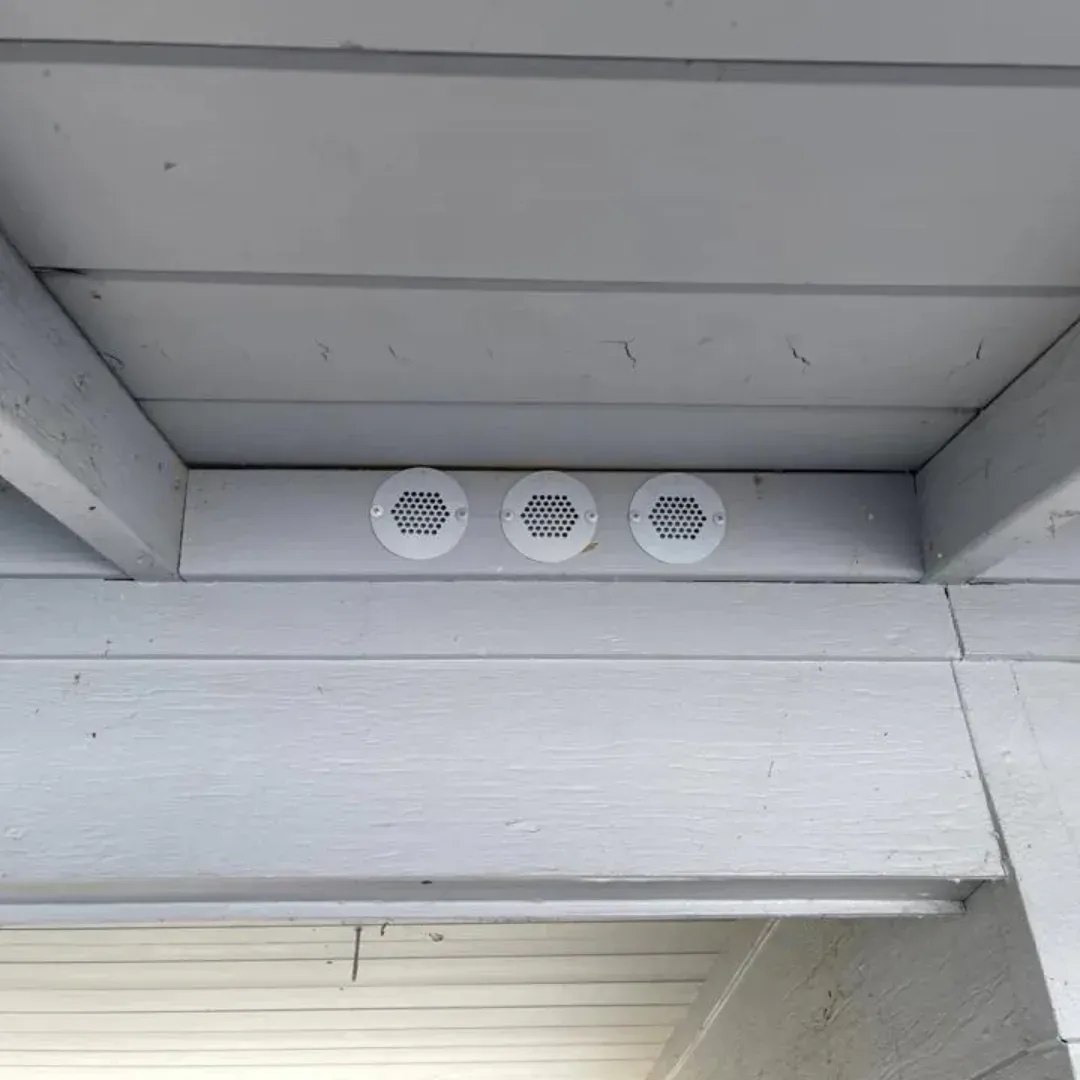
Round / Bird-Block
Listed round eave vents
T R A N S P A R E N T P R I C I N G
Packages starting at $55 per vent.
Per-vent pricing drops with volume. Whole home and HOA packages are quoted on site. Every job includes insurance-ready photo documentation.
Service
Foundation vent ember mesh retrofit (exterior)
Crawlspace vent retrofit (under-home access)
Soffit / eave vent ember mesh retrofit
Round bird-block vents installed
Ember-resistant gutter guards
Listed fire-resistant vent (Vulcan / BrandGuard, installed)
Starting Price
$55 / vent
$95 / vent
from $25 / vent
from $35 / vent
from $16 / LF
Quoted on site
Final pricing depends on vent count, size, access, and material selected.
TRANSPARENT PRICING
Packages starting at $55 per vent.
Per-vent pricing drops with volume. Whole home and HOA packages are quoted on site. Every job includes insurance-ready photo documentation.
Final pricing depends on vent count, size, access, and material selected.
The only GC-licensed wildfire hardening contractor in Central
Oregon.
A landscaper can clear brush. Permitted structural vent work, eave enclosure, and full vent assemblies
require a licensed general contractor. Every install is documented to the standards your insurer and
county actually use.
NFPA 1140
ORSC R327
ORS 477.025
NIST TN 2205
IBHS Wildfire Prepared Home
ASTM E2886
Find out where your home is exposed.
Book a free on-site vent assessment. We map every opening, flag what fails current
standards, and send you a written scope with transparent pricing. Typically back to you within 48 hours.
(541) 241-6157 · [email protected]
READY TO GIVE US A TRY?
Find out how many unprotected vents your home has. It takes about 20 minutes.
We'll walk every accessible vent, identify what's rated and what isn't, and give you a written estimate. No pressure.
(541) 241-6157 | [email protected]
SafeHaven got us insurable. After our carrier dropped us for wildfire hazards, Zach had a plan in place fast, hit our deadline, and delivered. The team was professional, communicated well, and left the property looking great. We recommend them without reservation.

Elise Frasier & Christopher Timura
Bend OR
SafeHaven did great work including installing metal fences, flashing, hardscaping and doing extensive removal of fire prone brush and junipers. The team executed the job on time, on budget and were a pleasure to work. Their work enabled us to keep our insurance on our Tumalo home

Andy E
Bend OR

Serving Bend, Sisters, Sunriver, Tumalo, Redmond, Deschutes County & La Pine


Menu
Links
Terms of Use
Privacy Policy
Cookie Policy
Address
© 2026 SafeHaven Fire Defense LLC. All Rights Reserved.